
With the rising popularity of artificial intelligence, the use of generative AI has become more normalized. It is almost impossible to go through a day in school without encountering someone, whether it be a teacher or a student, using AI.
According to the report Schools’ Embrace of AI Connected to Increased Risks by The Center for Democracy and Technology, 85% of teachers and 86% of students were found to use AI during the 2024-25 school year.
This increased use of AI in school will grow to be extremely harmful to future generations. There are many concerns I have regarding the use of generative AI, one of which is a large disconnect forming between students and teachers.
When teachers use AI to create assignments or homework, they are basically giving their job away to artificial intelligence. By doing this, they cannot ensure the assignments contain everything they need to, while also putting a bridge between them and their students.
According to the same polls, students who attend schools where teachers use AI for many reasons feel a 56% increase in disconnection from their teachers, and a 52% increase in desire to turn to AI rather than one of their teachers.
As a student, when a teacher uses AI to create assignments, it feels disingenuous and lazy, and while it may be faster, I think work will always feel more beneficial when I know it came directly from the mind of the teacher.
Another concern that presents itself with the rising use of AI is a loss in productivity and knowledge gain in students. While using AI might allow a student to turn in that essay due at 11:59 p.m., the vocab, grammar and writing skills they could have gained from doing the work themselves is lost. As the number of students relying on artificial intelligence to complete assignments rises, the risk for loss in critical thinking will surely rise as well.
While I cannot speak from the perspective of a teacher, I can guarantee that the majority of educators do not feel fondly about students using AI to write their essays, or get answers for a math assignment. Not only does the use of AI by teachers affect students negatively, the use of AI by students will and already have complicated the teaching field.
Now more than ever, people either hear stories or experience firsthand the use of AI detectors to partially determine students’ grades. Many teachers have now implemented these AI detectors into their grading process, often setting a certain percentage of AI detection permitted before either the students grade is lowered, or in some cases, plummeted down to 0. While this method can successfully detect AI in students’ work, the programs are also made using AI, which we know to be unreliable. This can lead to students who do not use AI to be accused of it, either from a malfunction or fluke from the program, or from simply sounding too educated—using punctuation commonly associated with artificial intelligence, such as the em dash—which could have very negative consequences.
This false accusation that can occur with AI detectors may discourage more educated students from writing to their full potential. If I wrote an essay myself and failed simply because of being accused of using AI, I would certainly dumb down my writing to avoid the issue in the future.
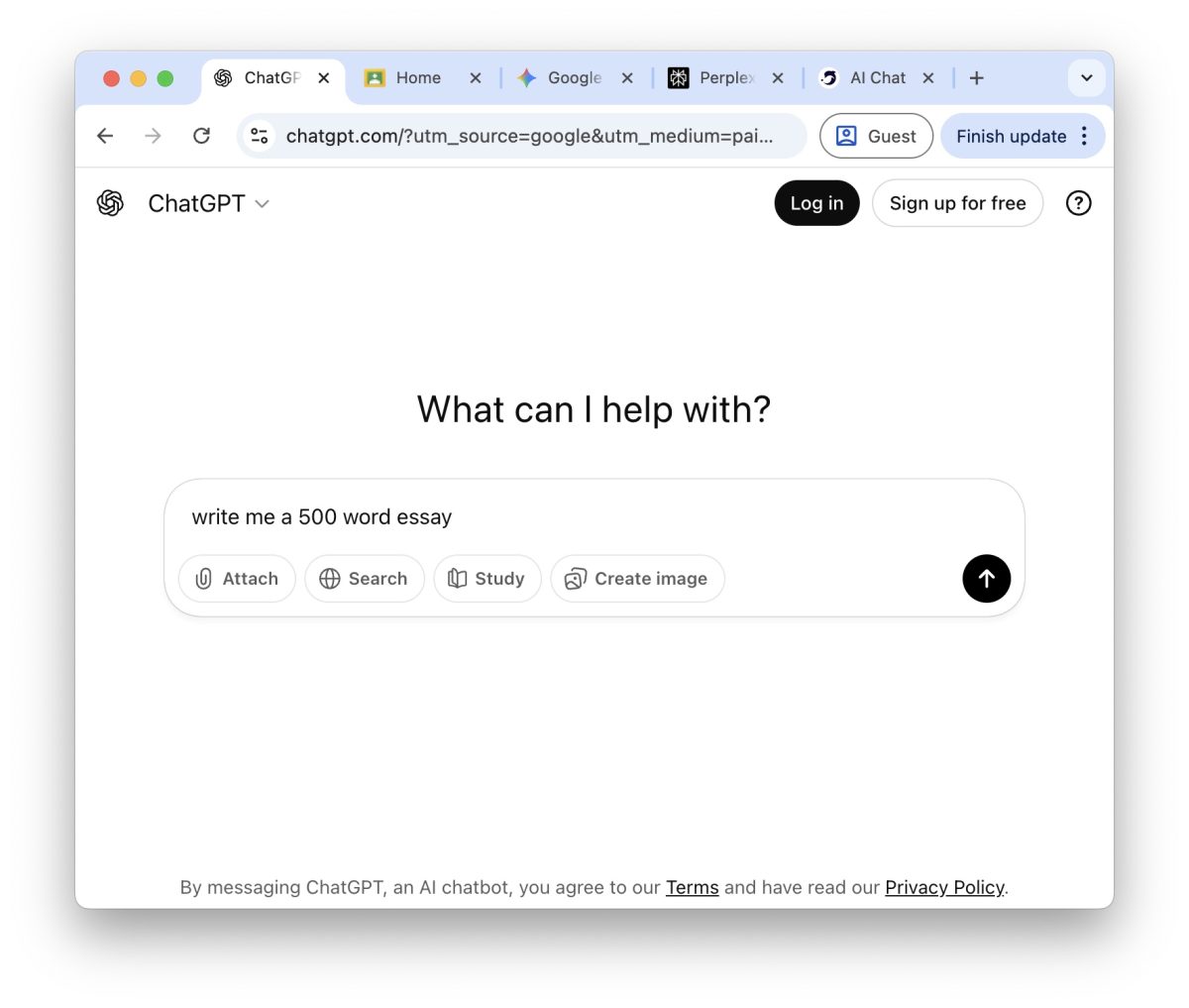
These examples of the negative effects of AI are a few in a large pool of consequences. I think that big corporations continuing to upgrade their AI programs will end up being detrimental, not only to students—but in the long run—to society as a whole. A solution to this issue would be to limit civilian access to generative AI. Considering access to these programs is as easy as simply searching Chat GPT into Google, students have a much easier time using said programs. While I don’t believe this solution will ever be put into action, I think it would exponentially benefit the next generation of adults, who we all know are our future.